

October 5, 2026 •Johnson County CASA
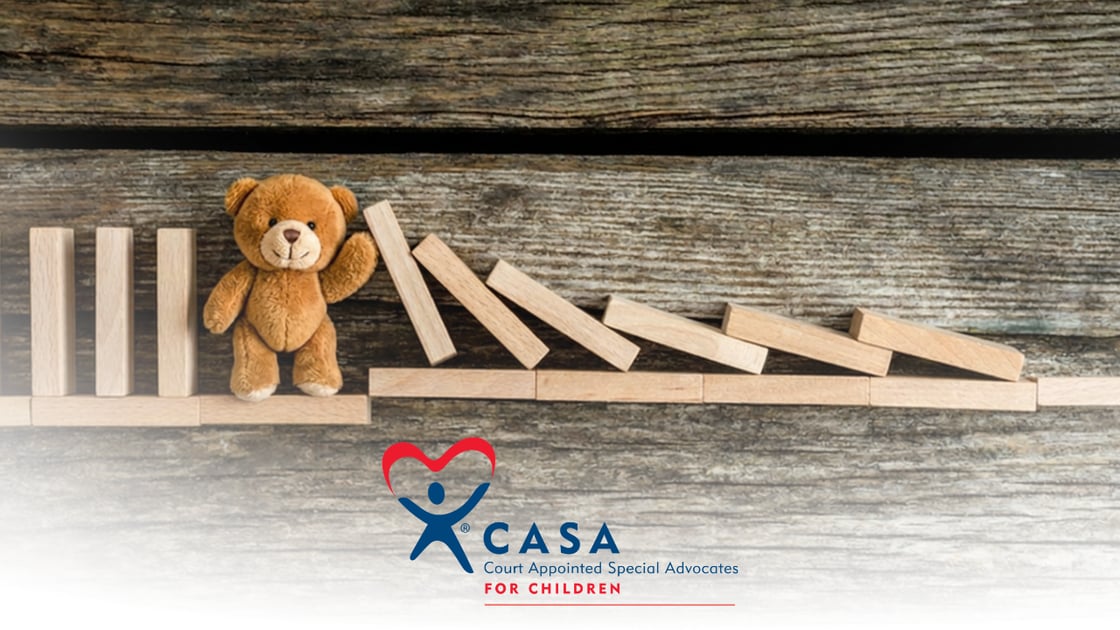
A child should be able to count on certain things.
Who will be there tomorrow. Where they will go to school. Who will listen when something is wrong. Which adults will keep their promises. What home will feel like next week.
For a child who has experienced abuse or neglect, some of those answers may suddenly become uncertain.
Homes can change. Schools can change. Caseworkers and service providers can change. Court dates come and go. Adults make important decisions about what happens next.
In the middle of all that change, stability matters.
It can’t erase what a child has experienced, and no single person can make every uncertainty disappear. But having someone dependable who continues to show up can give a child something important to hold onto.
That is one reason the role of a Court Appointed Special Advocate is built around consistency.
At Johnson County CASA, trained and supported volunteers advocate for children involved in the court system throughout Johnson County, Indiana. They listen, gather information, stay connected, and help make sure the child’s needs and experiences remain part of the conversation.
Sometimes one of the most meaningful things an advocate can do is simply keep coming back.
Stability matters because a child experiencing major changes needs people and relationships they can count on. For a child experiencing abuse or neglect, uncertainty can become part of everyday life.
They may not know where they will be living next month. Their school or daily routine may change. New adults may become involved in their case. They may have to adjust to unfamiliar people and places while decisions about their future are being made.
Stability does not mean promising a child that nothing will change. That’s never a promise that can be made, but what they can do is become one person the child recognizes, one person who remembers what happened before, and one person who continues paying attention as the case moves forward.
Over time, simply knowing that someone will come back can matter.
Instability can show up in many parts of a child’s life, from where they live and attend school to the adults involved in their case. When adults talk about a child’s case, change can sound administrative.
A placement changed. A new caseworker was assigned. A hearing was rescheduled. The child transferred schools. But a child lives through each one of those changes.
A different placement may mean a different bedroom, new rules, a longer drive to school, or less time with people they know. Changing schools can mean new teachers, unfamiliar classmates, missed assignments, and another new routine to learn. Even necessary or positive changes can require adjustment.
Stability is not about keeping everything the same at all costs. Sometimes change is necessary for a child’s safety or best interests.
It is about creating as much consistency, connection, and predictability as possible while the adults involved work toward what comes next.
There are also many assumptions about what children in foster care experience and what their circumstances look like. Understanding some of the common myths about foster care can help you see why every child and every case needs to be understood individually.
What a volunteer can offer is consistency in how they advocate.
A CASA volunteer spends time with the child, communicates with important people in the child’s life, gathers information, follows up on concerns, and helps the court understand what may be in the child’s best interests.
 Consider something as simple as a child mentioning that they are struggling at school.
At the next visit, their CASA volunteer can remember that conversation and ask what happened. Did anything change? Was additional support provided? Is the child still struggling?
Or perhaps the child has moved.
The CASA volunteer continues looking at the bigger picture. How is the new placement affecting school? Are important relationships being maintained? Are services continuing? How is the child adjusting?
The volunteer does not have to solve every problem.
They keep paying attention.
That is one of the ways consistency becomes advocacy, and it is an important part of how CASA supports children involved in the foster care system.
It is easy to focus on the biggest parts of a CASA case.
Court hearings matter. Reports matter. Recommendations matter.
But relationships often grow between those moments.
A child may notice that you remembered something they told you during the last visit.
They may notice that you asked about the class they were worried about.
They may notice that when you said you would return, you did.
Trust can’t be rushed, especially when a child has experienced adults or circumstances changing around them.
A CASA volunteer does not need to force a relationship or expect a child to open up immediately. The role is to be dependable enough to give that relationship time.
The impact of CASA advocacy is not always dramatic or visible in one moment. Sometimes it is remembering. Following up. Asking another question. Noticing something has changed. Making sure a concern does not disappear as the case moves forward.
CASA asks volunteers to make a longer commitment because consistency is part of the advocacy itself.
There are many meaningful ways of helping children in need in Johnson County, but CASA is different from volunteer opportunities that involve a single event, an afternoon, or a short-term project.
A child’s court case unfolds over time. Circumstances change. Relationships develop. New concerns can appear. Progress may happen gradually.
A CASA volunteer who remains involved can understand those changes in a way that is difficult to do from a single meeting or report.
You may remember where the child was several months ago and recognize what is different today. You may know which questions have already been asked. You may recognize a concern that keeps coming up. You may remember something the child said months earlier that becomes important later.
That history matters.
The commitment is not simply about fulfilling a volunteer requirement. Consistency is part of being able to understand what has changed, what still needs attention, and what may be in the child’s best interests.
Being a steady presence means continuing to listen, pay attention, follow up, and advocate as a child’s circumstances change.
It does not mean you have to create a breakthrough moment every time you see a child.
Much of CASA advocacy is quieter than that.
You may visit and listen to the child, check in with caregivers or teachers, communicate with caseworkers and service providers, follow up on previous concerns, prepare information for court, or ask questions about something affecting the child’s well-being.
Sometimes the most important part is that those actions happen again and again.
You learn what happened before the latest change.
You understand what is happening now.
And you continue asking what the child may need next.
One consistent adult can matter because consistency allows someone to keep listening, remembering, noticing changes, and following up over time.
A CASA volunteer cannot undo what a child has experienced, control the outcome of a case, or promise that everything ahead will be easy.
The value often comes from something much quieter.
You listen when the child talks.
You remember what they told you.
You notice when something changes.
You follow up when a concern has not been addressed.
You keep learning about what is happening in their life.
And you help make sure that information is part of the decisions being made about their future.
You keep showing up.
For a child whose world may include a great deal of change, that consistency can become an important part of their CASA experience.
You don’t have to know today whether CASA volunteering is right for you. Your first step can simply be understanding the role. You may read about consistency and immediately think about the responsibility behind it. You may wonder whether you have enough time. Whether the emotional side of the work will be difficult. Whether you will know what to say to a child. Whether the court will feel intimidating. Whether someone without legal or child welfare experience can really contribute.
Those are good questions to ask before becoming a volunteer.
You don’t have to begin by deciding that you are ready to accept a case.
Your first step can simply be learning what CASA volunteers actually do.
Johnson County CASA provides training and support so you can understand the role, expectations, and commitment before taking that step.
The goal is not to pretend CASA volunteering is always easy.
It is to help you decide whether you can provide the thoughtful, consistent advocacy a child deserves.
Someone came back. Someone remembered. Someone listened. Someone noticed that something had changed. Someone asked another question. Someone made sure the child’s experience remained part of the conversation.
That is the quiet power of consistency.
For children involved in the court system in Johnson County, a CASA volunteer can provide a steady presence while so much else is being decided.
You do not need a legal or child welfare background to become that steady presence. You need training, support, commitment, and a willingness to keep showing up.
If you are wondering whether CASA volunteering could be right for you, take the first step and learn more about becoming an advocate with Johnson County CASA.
Be The Child’s Voice in Court.
CASA advocacy is designed around consistency. A volunteer remains involved with their assigned case so they can understand what changes over time, follow up on concerns, and continue advocating for the child’s best interests.
No. You do not need a professional background in child welfare, law, social work, or counseling. Johnson County CASA provides training and ongoing support to prepare volunteers for the role.
No. CASA volunteers and DCS caseworkers have different responsibilities. A CASA volunteer provides court-appointed, child-focused advocacy and helps the court understand what may be in the child’s best interests.
Working full time doesn’t automatically prevent you from becoming a CASA volunteer. The role does require consistency, and some responsibilities may take place during business hours, so it is important to understand the commitment before applying. Many of our current volunteers work fulltime and have a family of their own.
You can start by learning more about Johnson County CASA and what advocates do. Taking time to understand the role is a meaningful first step, even if you are not ready to apply yet.